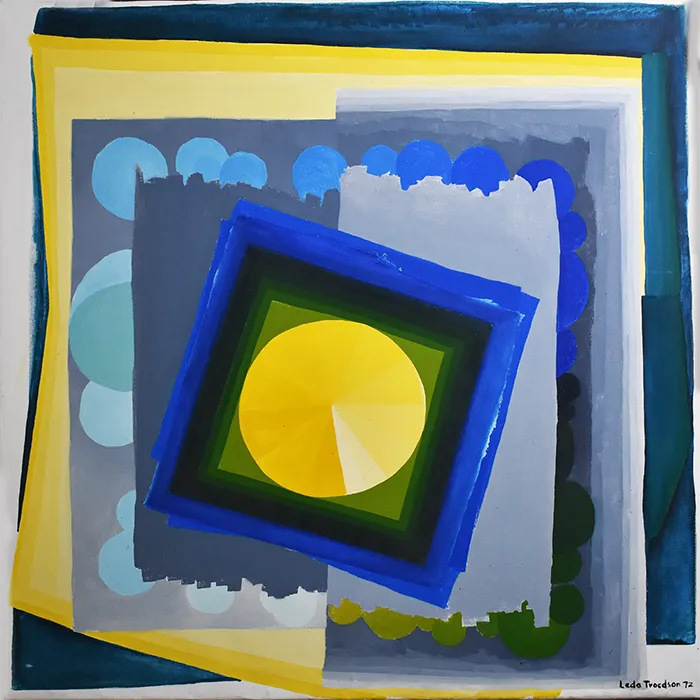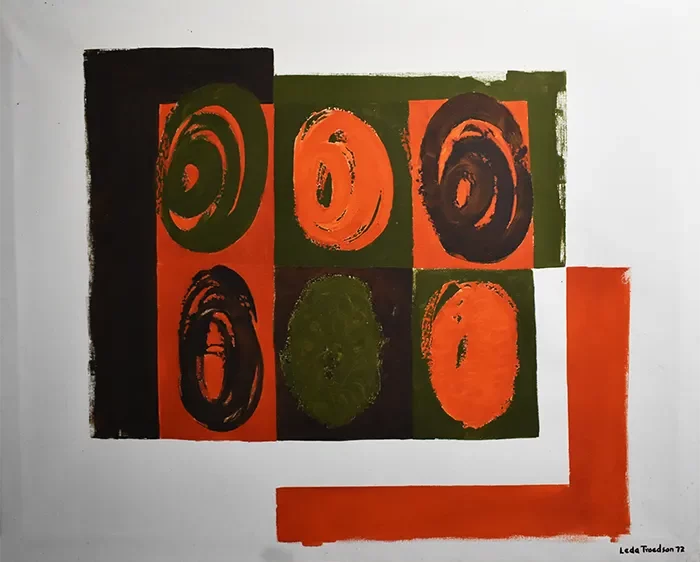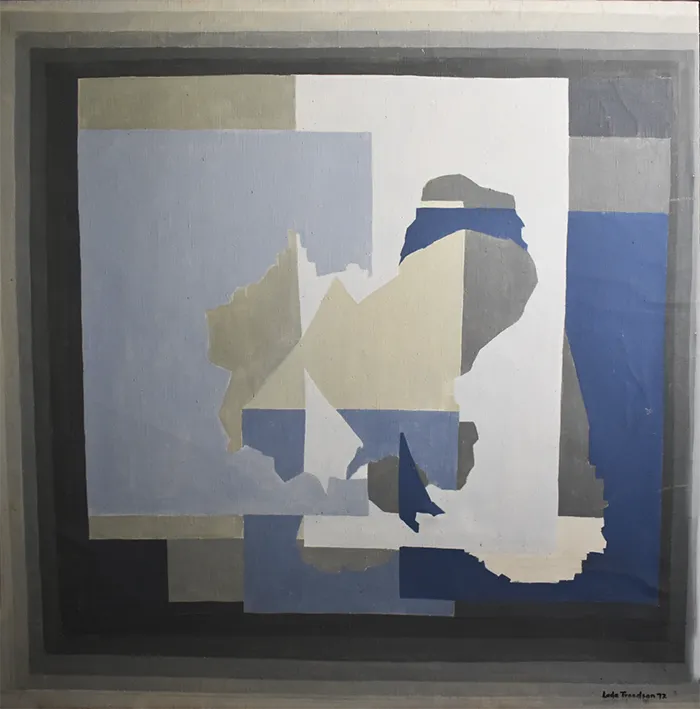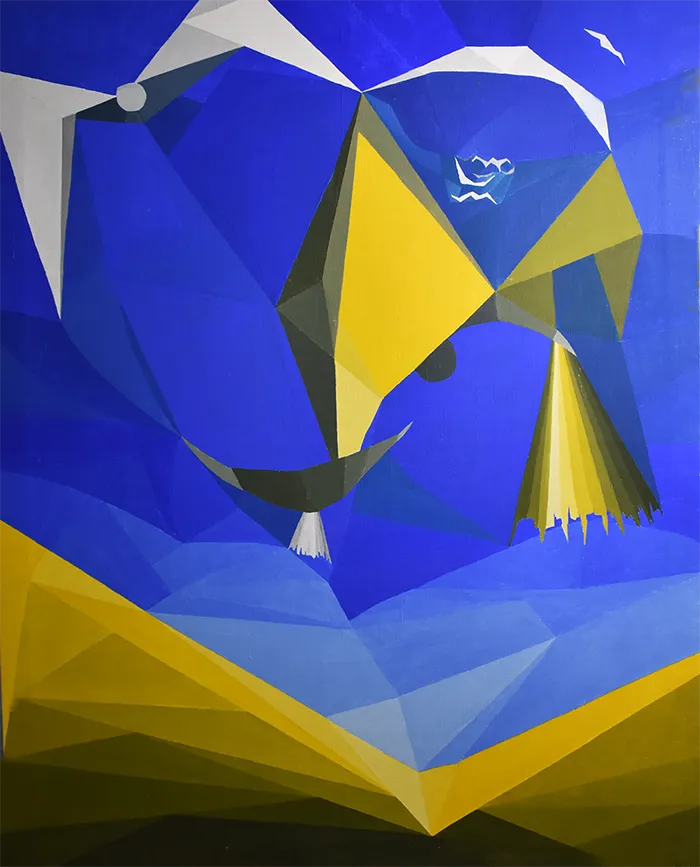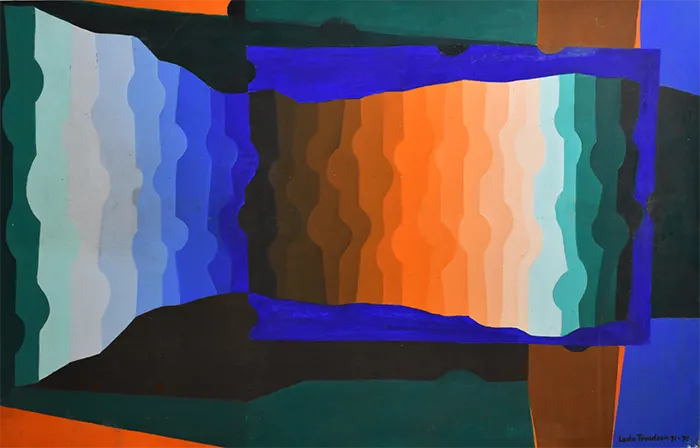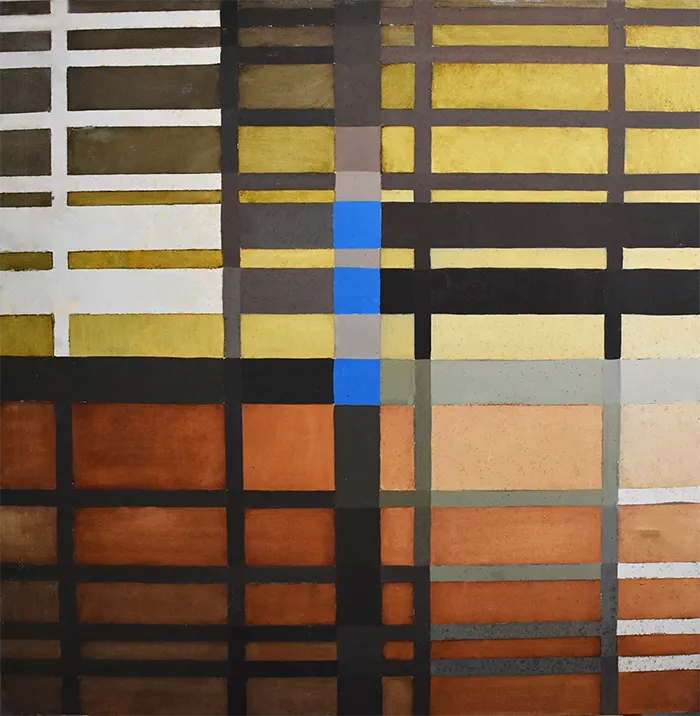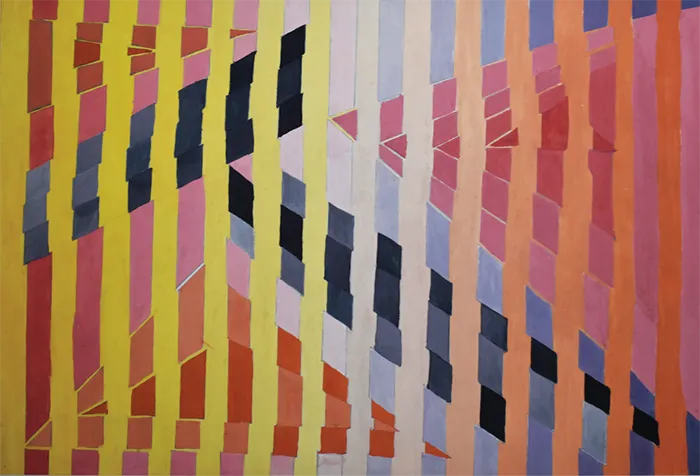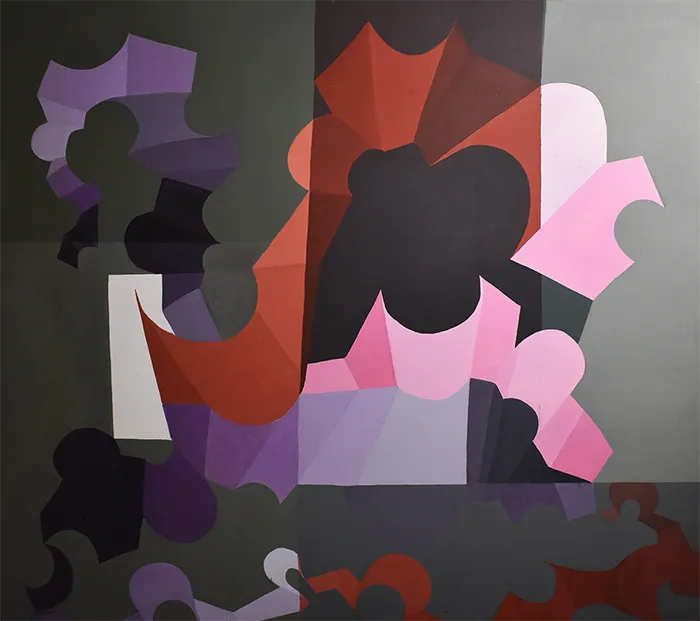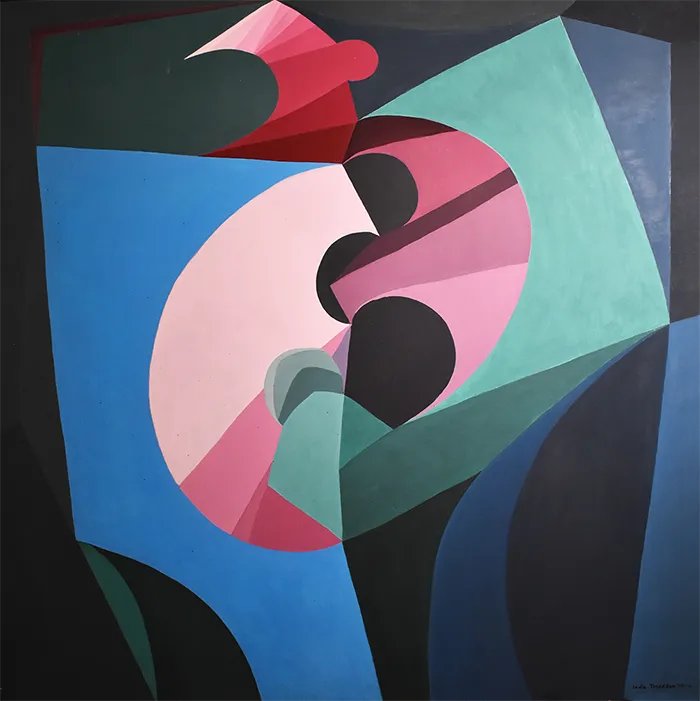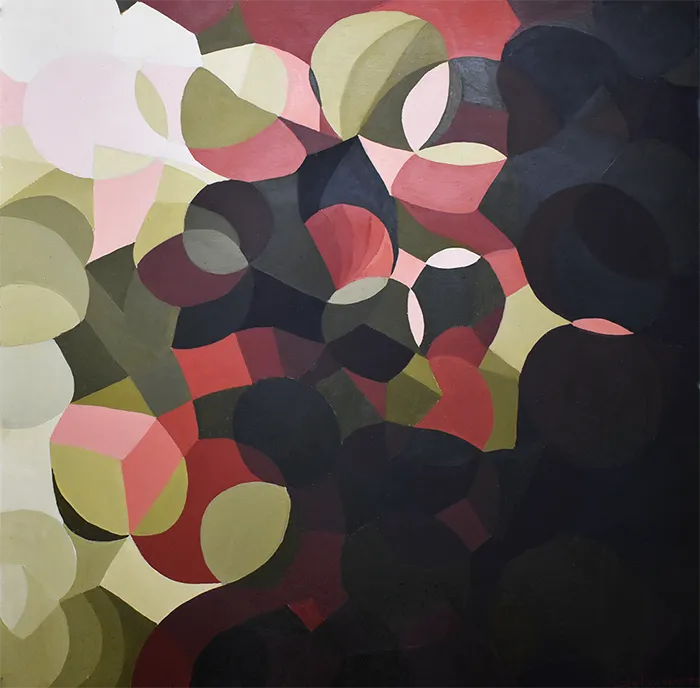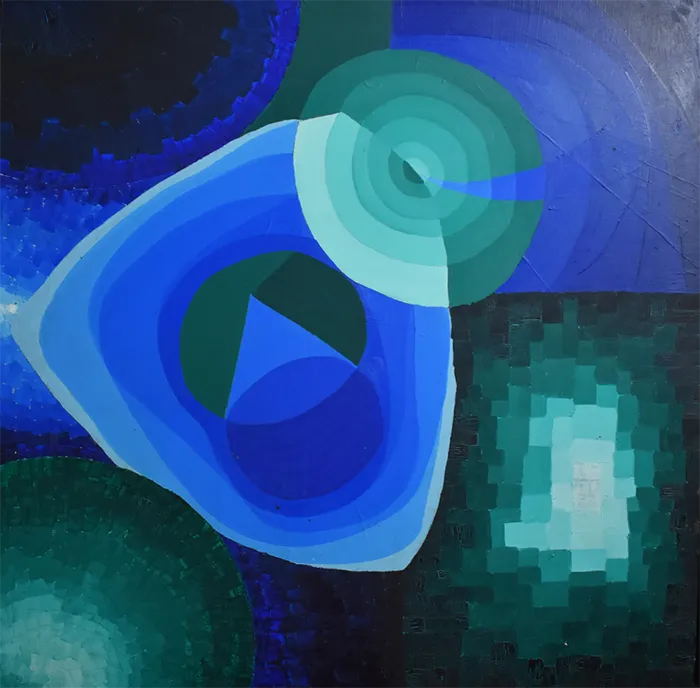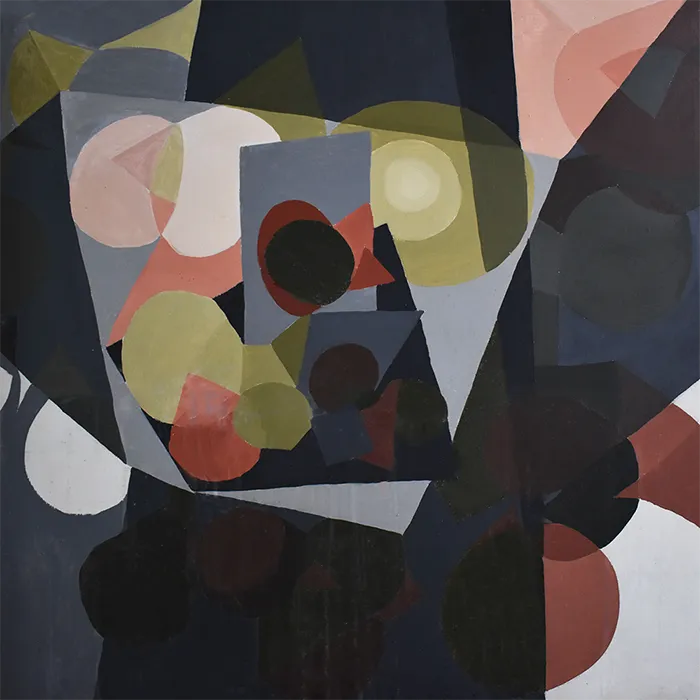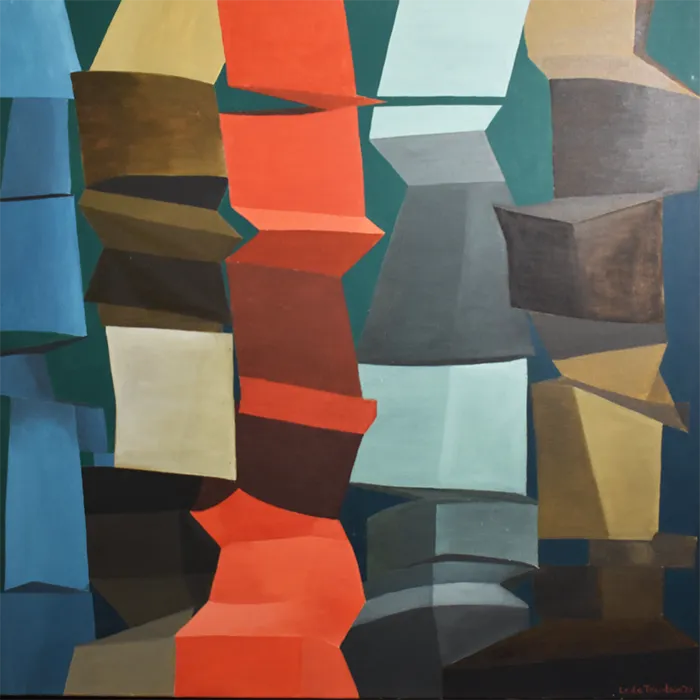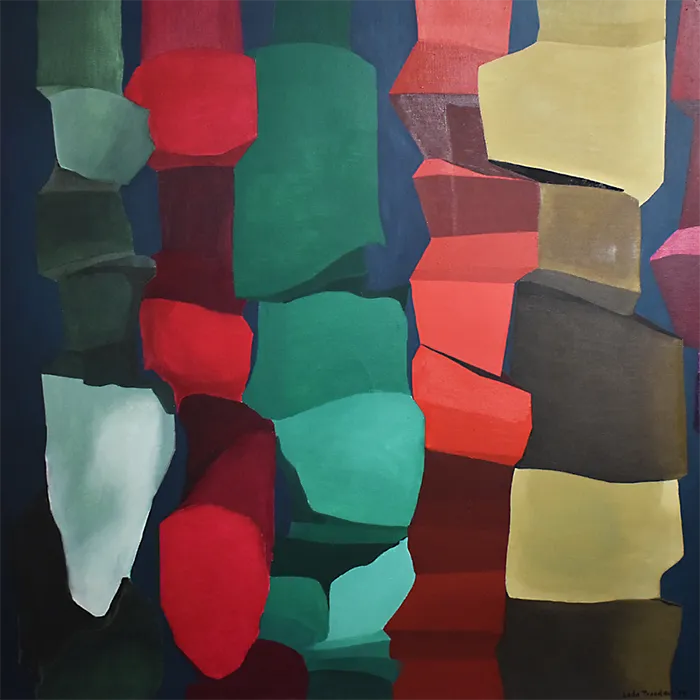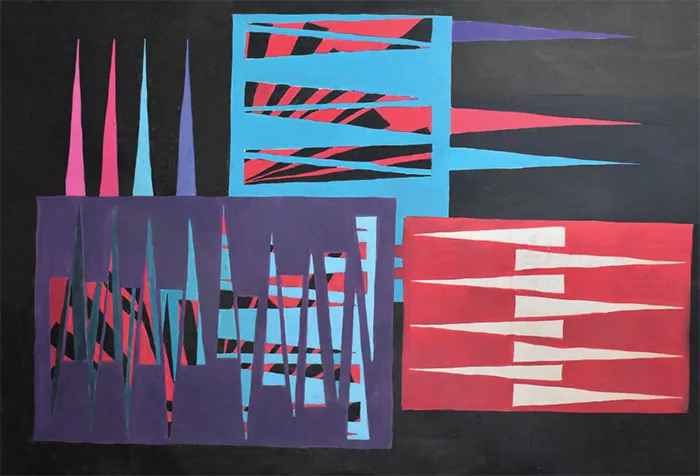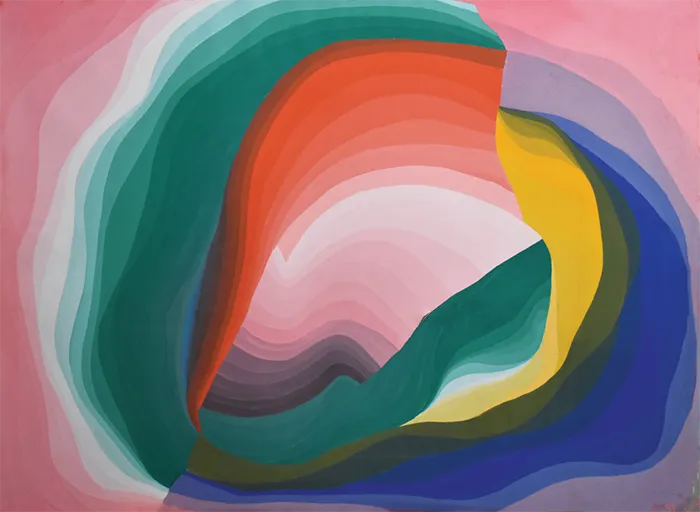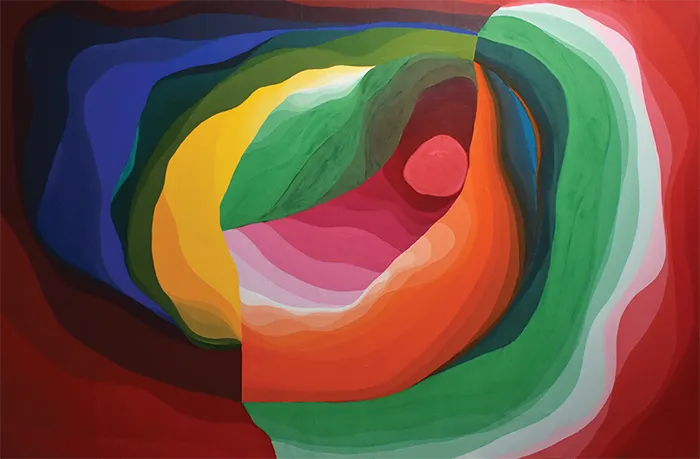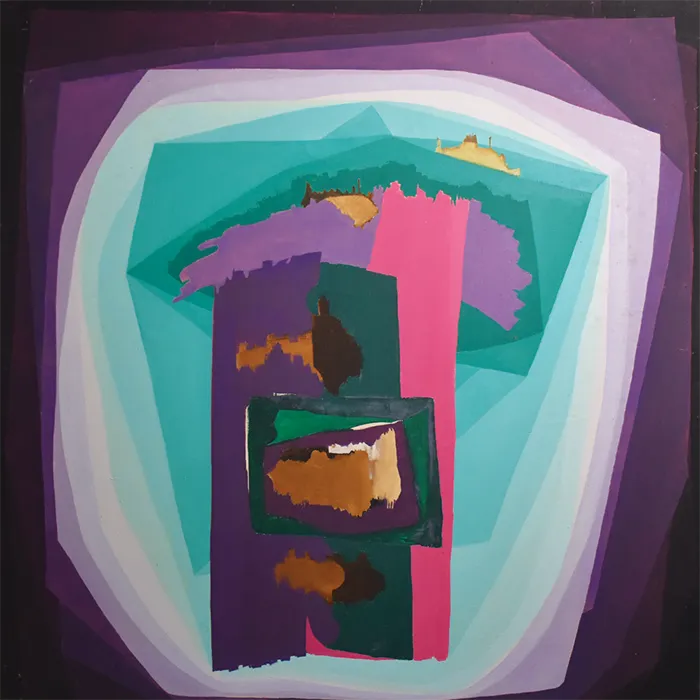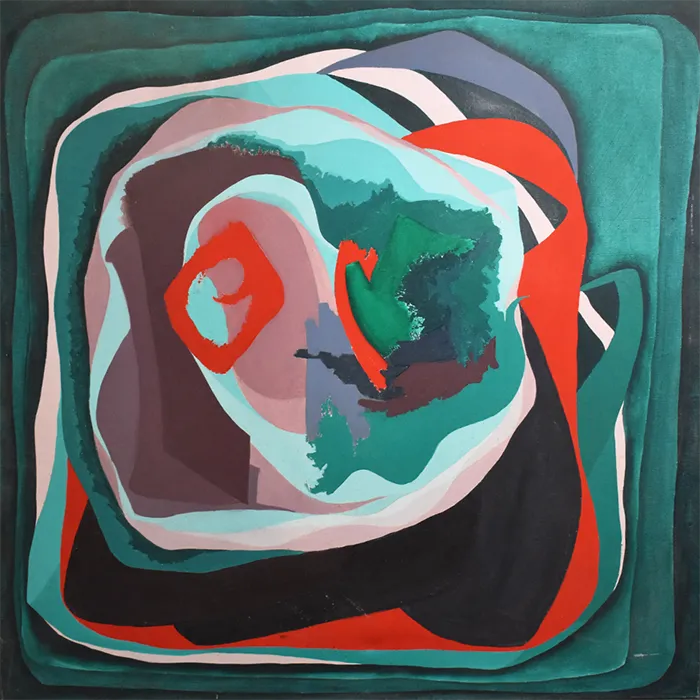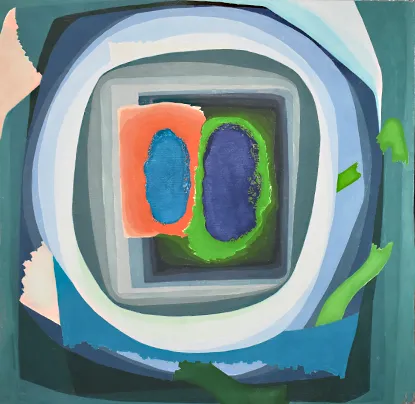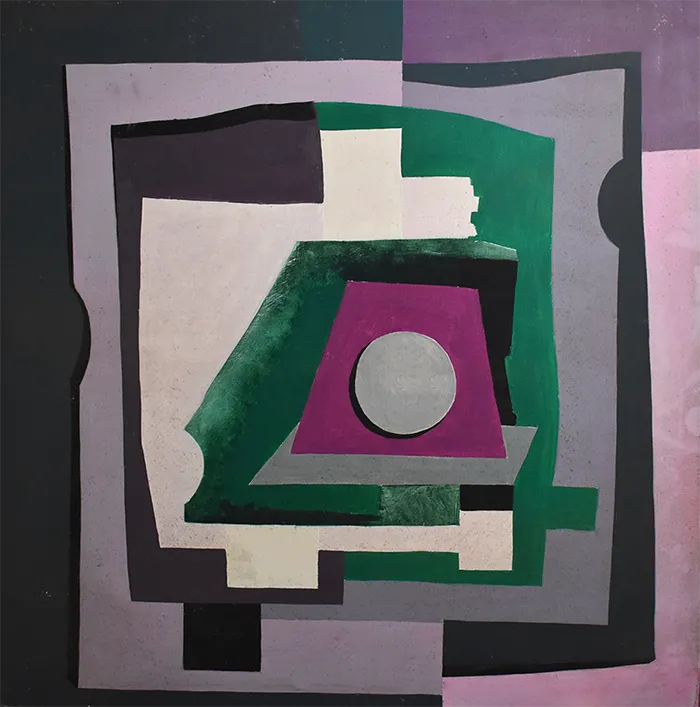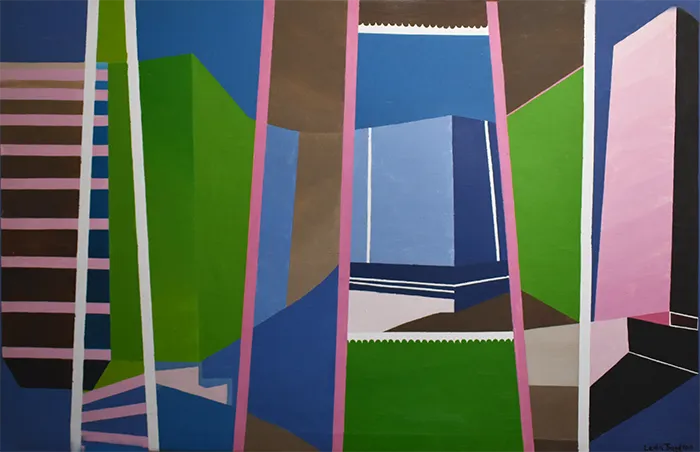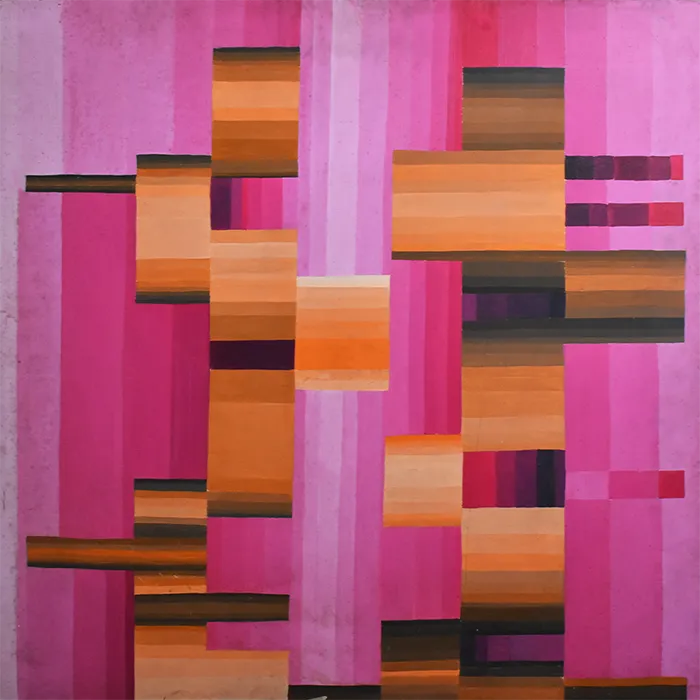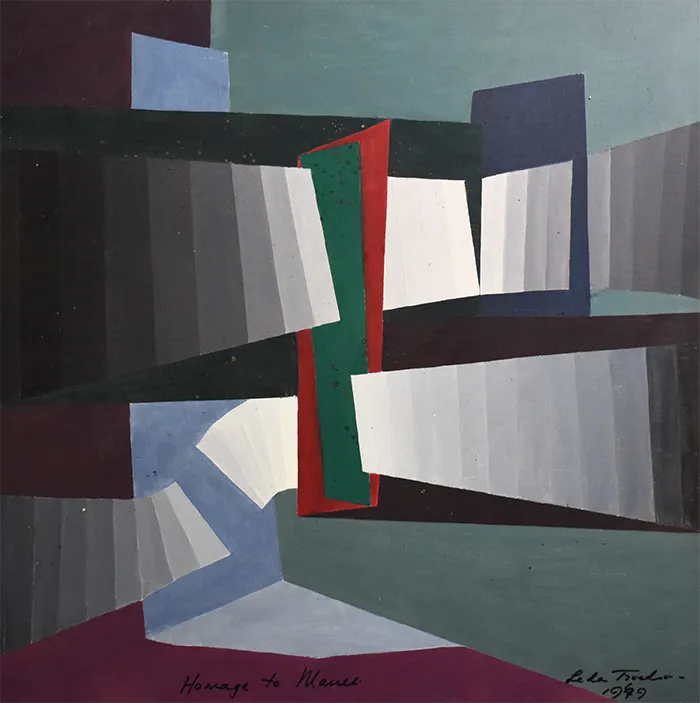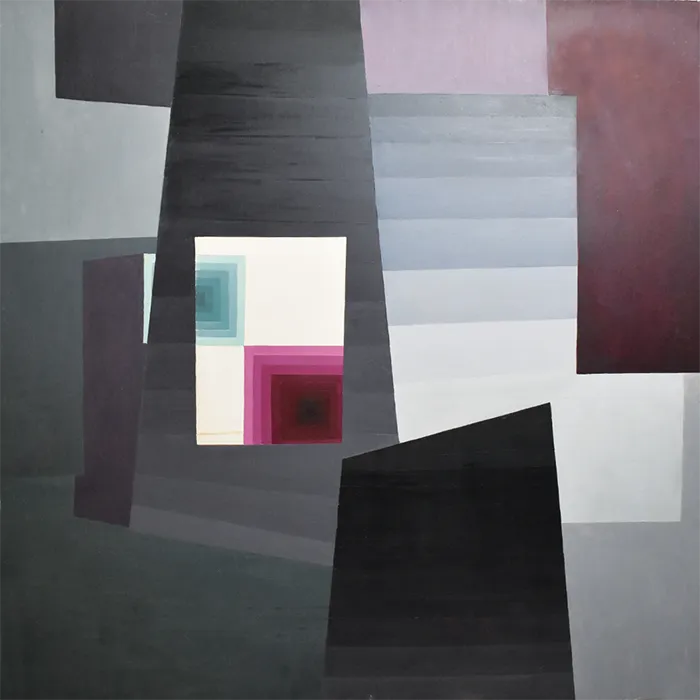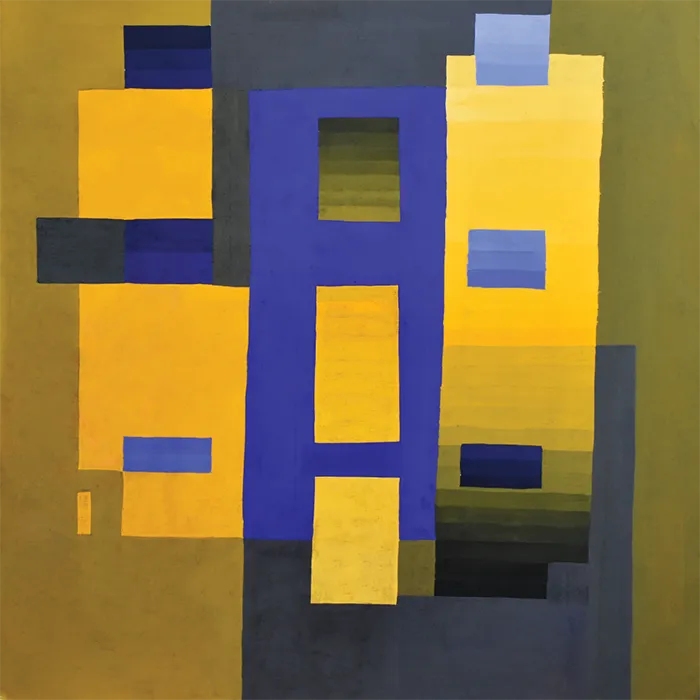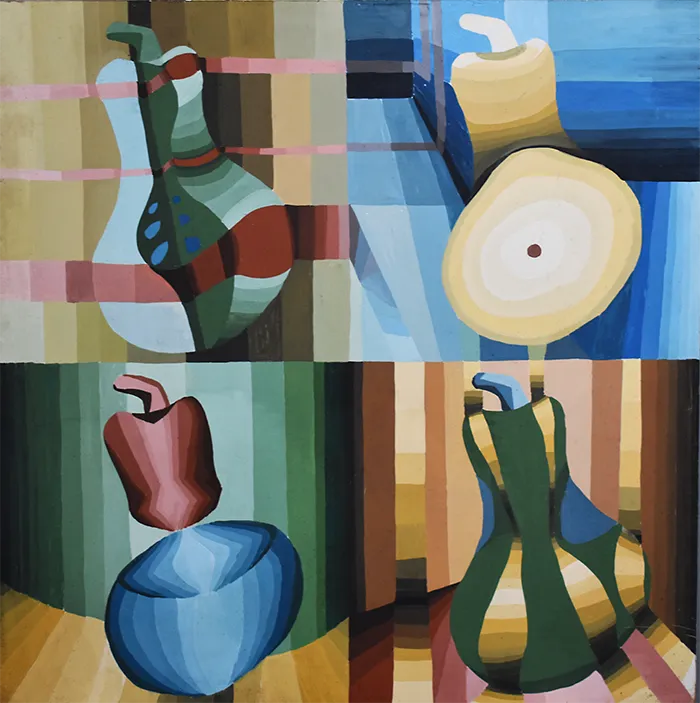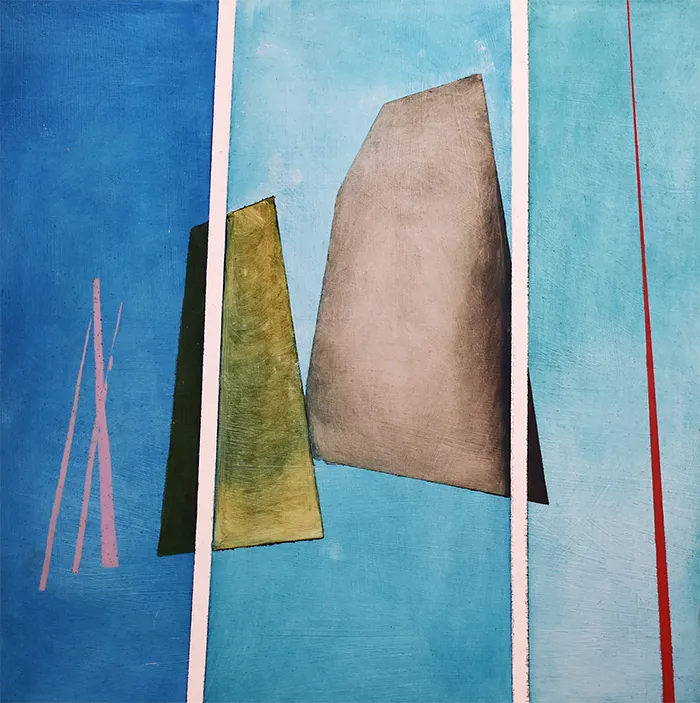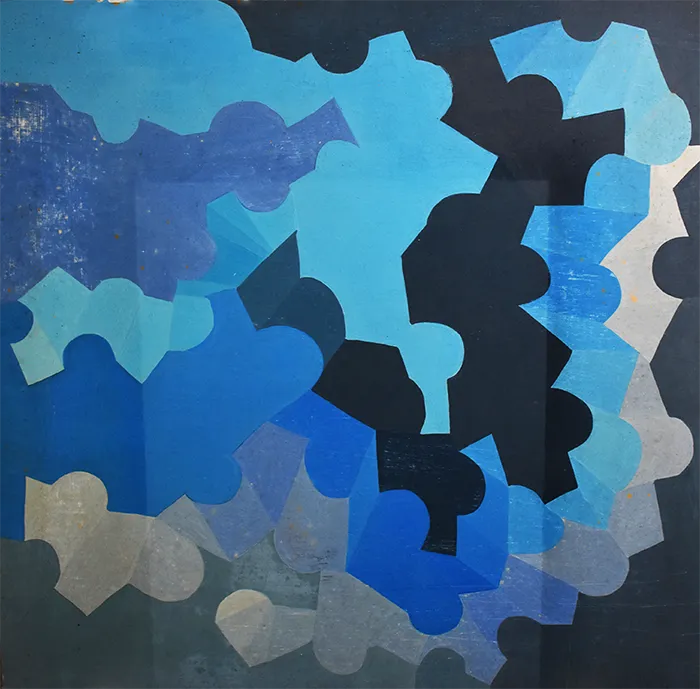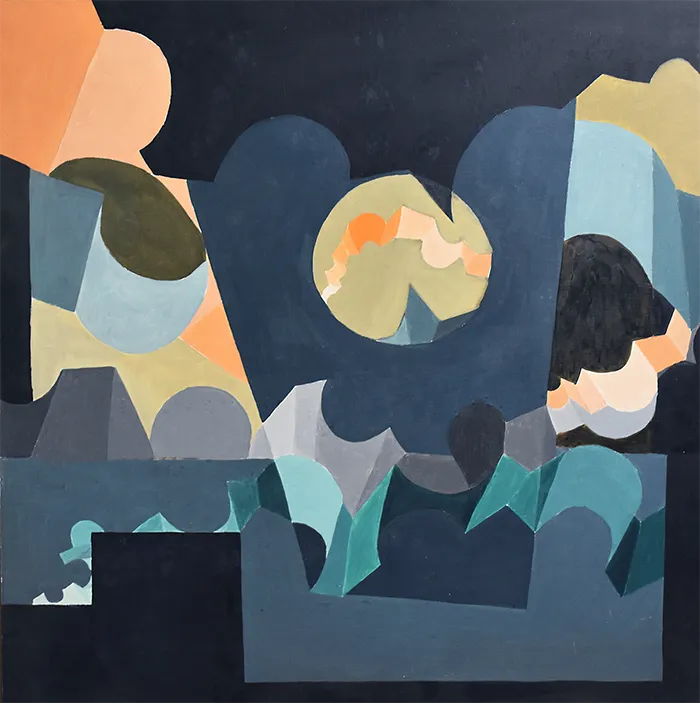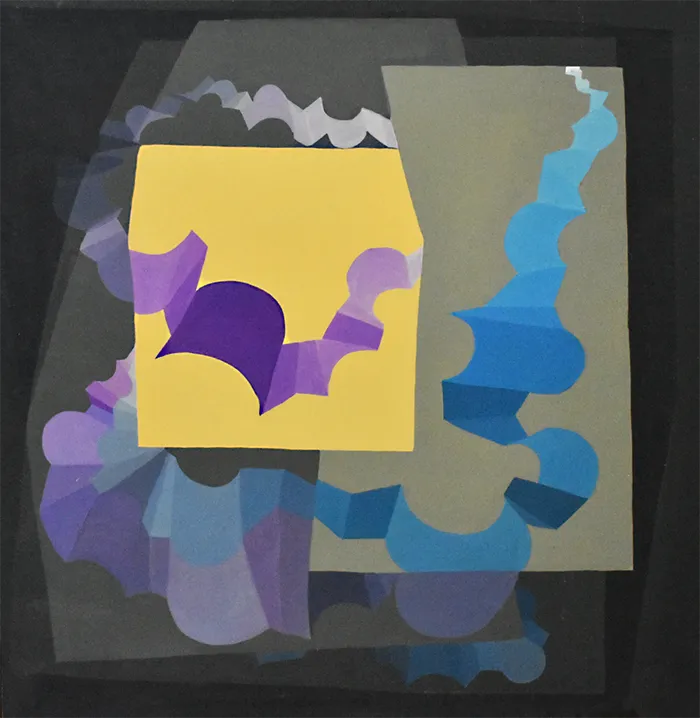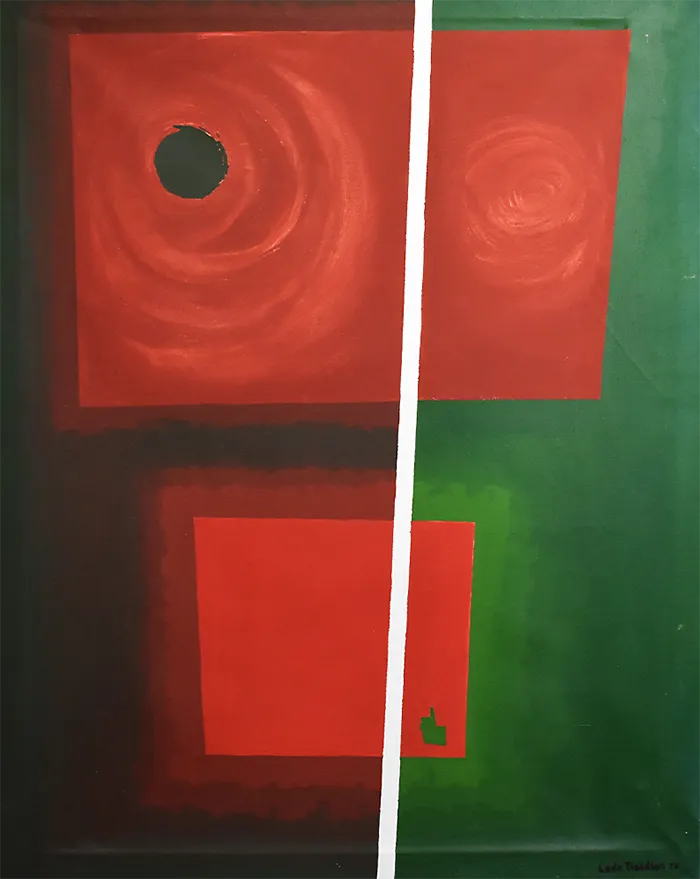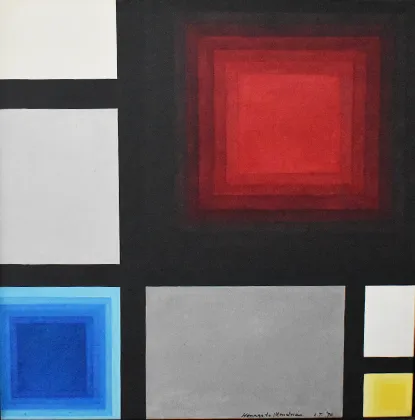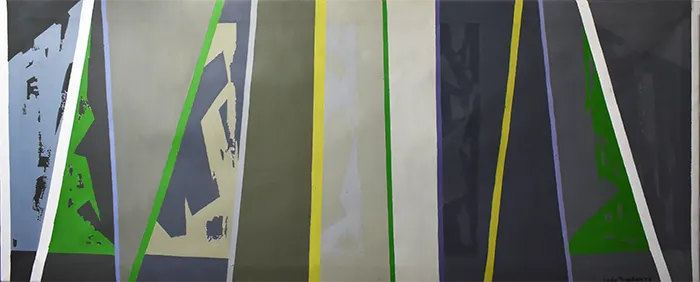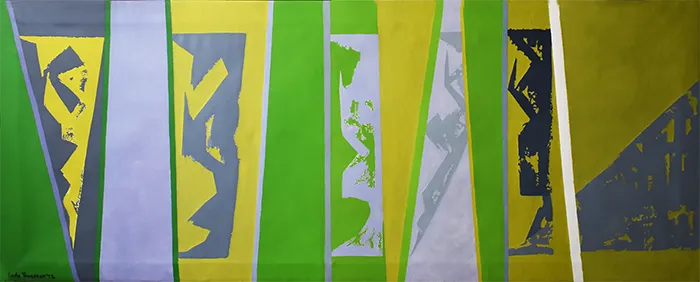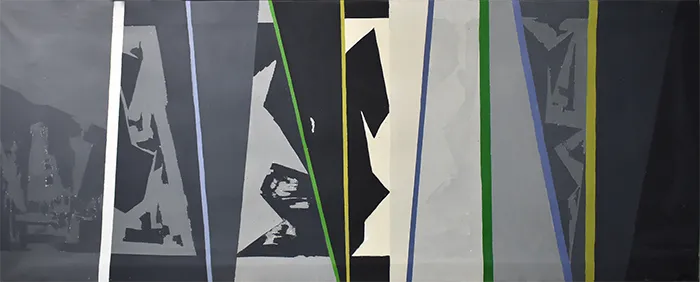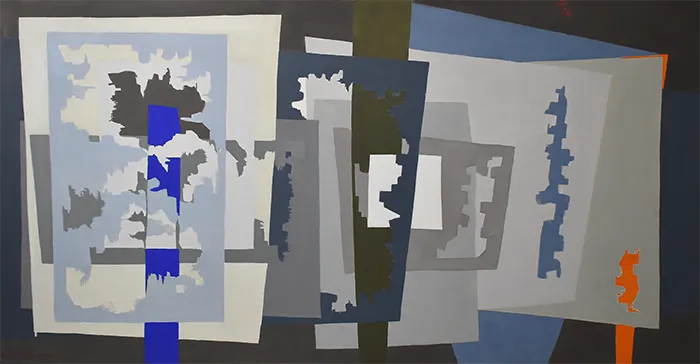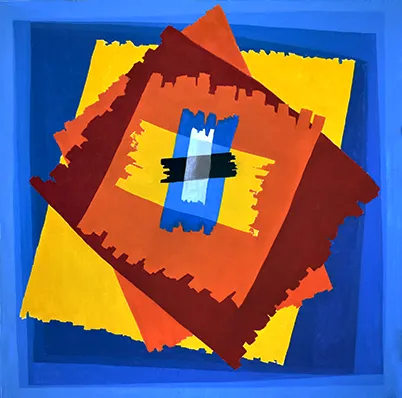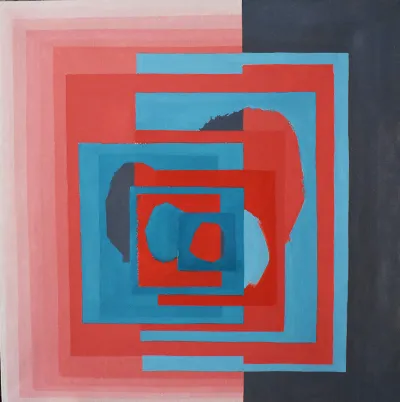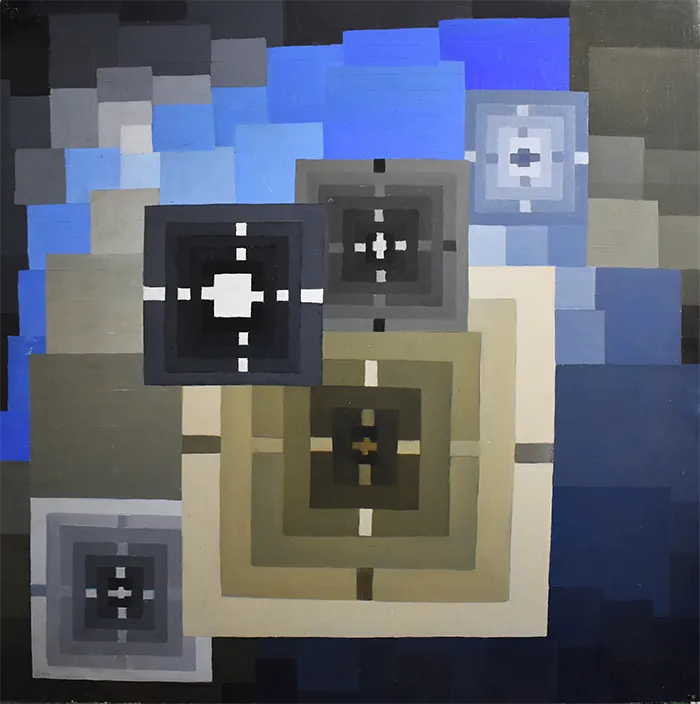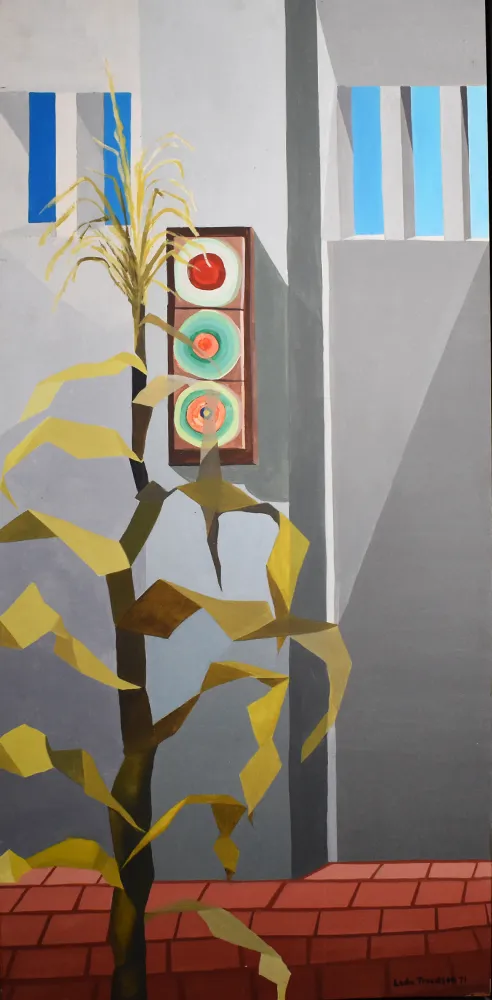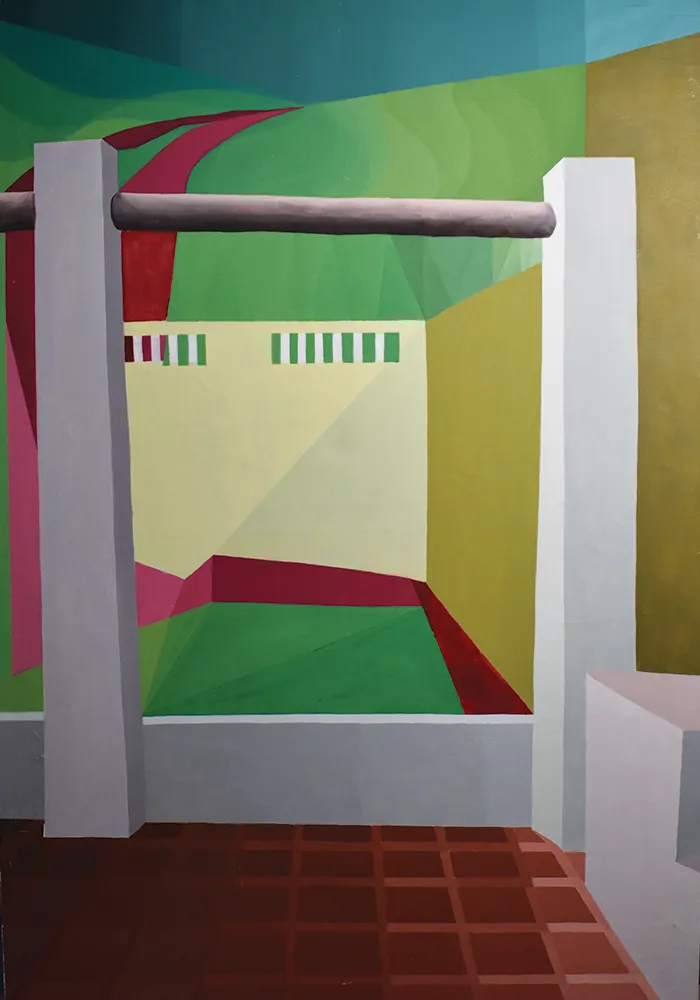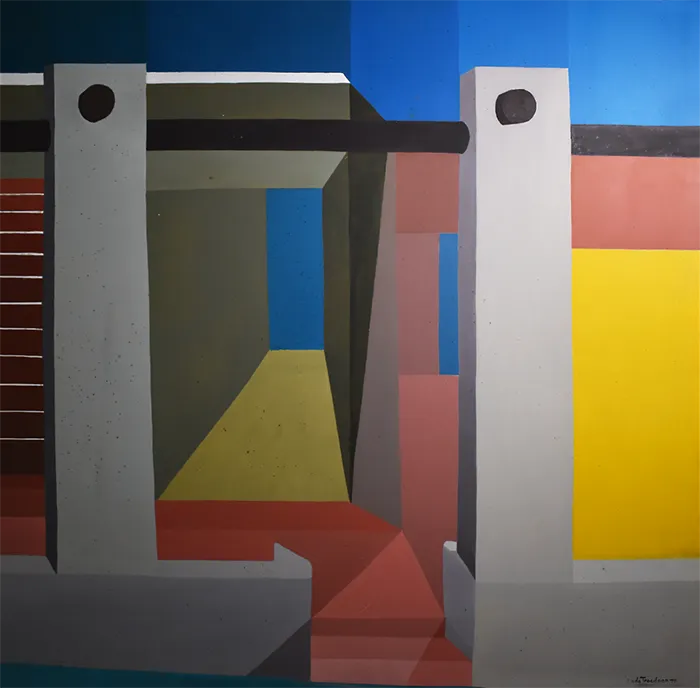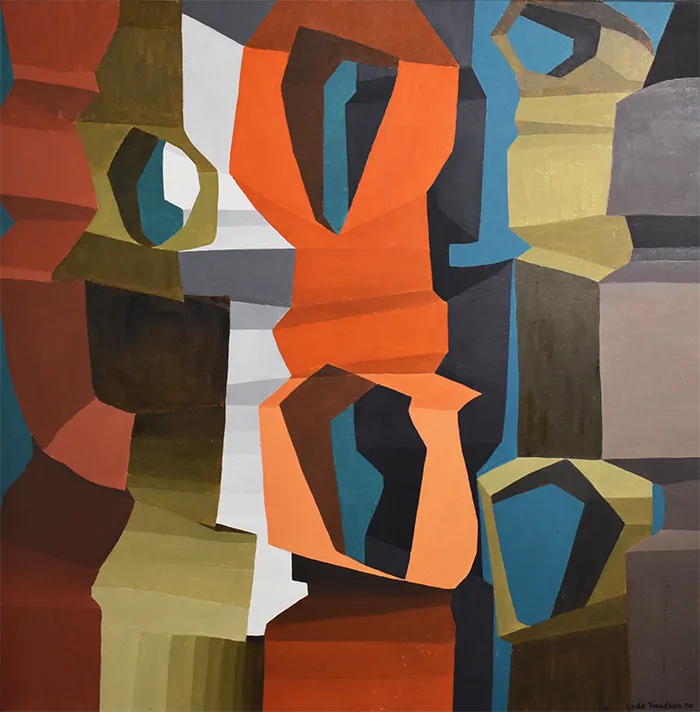
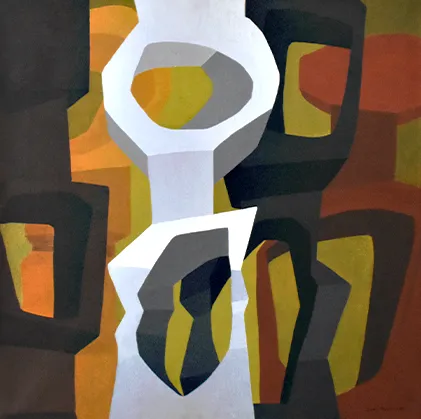
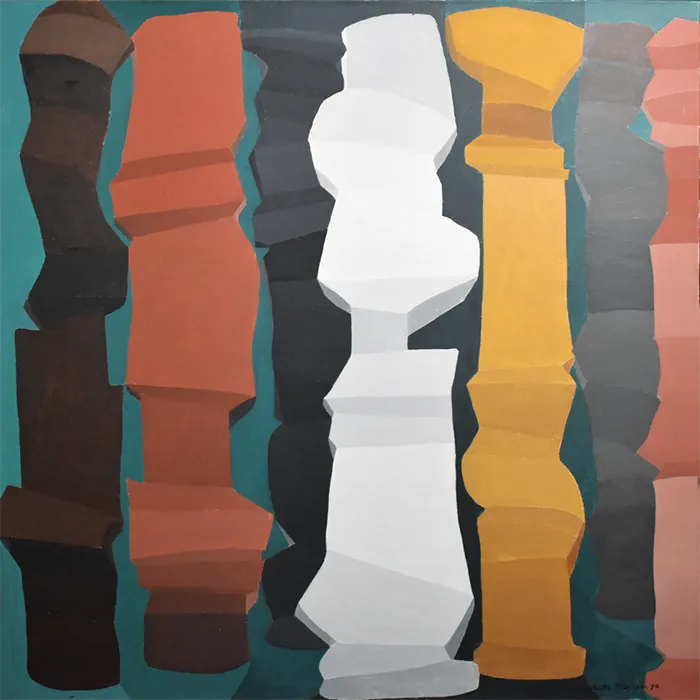
The paintings from this period use interlocking shapes, strong contrasts, and a controlled geometry. They show Leda working through a visual language shaped by modernist ideas, including the example of artists such as Piet Mondrian and Victor Vasarely.
This was also a period of major change in her personal life. The works belong to the same time as the final decree of her divorce, and to a wider period of personal transformation. That change is part of the background to the work, but the paintings do not need to be reduced to it.
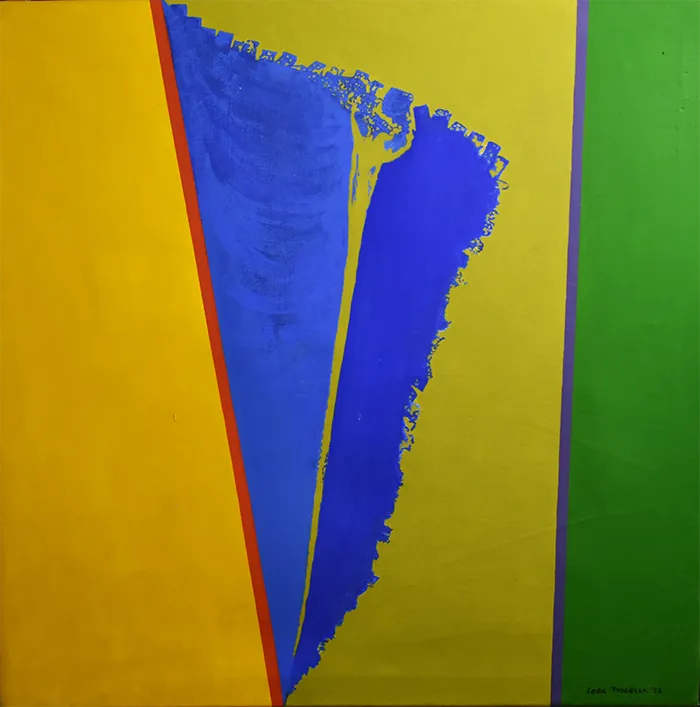
The later London works of 1972 widened this body of work further. They belong to a period in which Leda was living in a different artistic environment and looking closely at European abstraction.
Some of the works in the ‘London Series’ also register contemporary events that had captured the public imagination. Among them is ‘Pulse’, a painting linked to the first heart transplant. Leda’s earlier work at the South African Institute of Medical Research gave this subject a particular resonance for her. The painting stands as one of the most distinctive works of the series.
The moon landings also found their way into this body of work. In three related paintings, Leda turned to abstract form and colour to register the visual drama and imaginative force of that event, rather than to describe it literally.
Leda was deeply drawn to the sharp geometry and abstract language of European modernism, and this found some of its clearest expression in the ‘London Series’.